
KAMPALA — The People’s Front for Freedom (PFF) has claimed that sustained pressure from journalists, civil society organizations, human rights defenders and opposition leaders compelled security agencies to reveal the whereabouts of party president Erias Lukwago following his arrest earlier this week.
Addressing journalists after reports emerged that Lukwago was being held at Kira Division Police, PFF deputy chairperson Lulume Bayigga said the party had finally established contact with its leader after several days of uncertainty.
Lukwago was seized from his home in Wakaliga on Monday by security operatives and taken to an undisclosed location, prompting concern among opposition supporters, lawyers and human rights activists who demanded information about his whereabouts.
Bayigga argued that growing public scrutiny ultimately forced the state to disclose where the former Kampala Lord Mayor was being held.
“We are now aware that he is in Kira Police Station. Senior Counsel Medard Lubega Sseggona is there with him and we are going to join him shortly,” Bayigga told journalists.
“We have been made aware that the pressure that people mounted yielded fruits and the state had to respond.”
Lukwago was on Wednesday arraigned before the Makindye Chief Magistrate's court and charged with misprison of treason. The charges see him join the very client he has been representing in court for the same allegations.
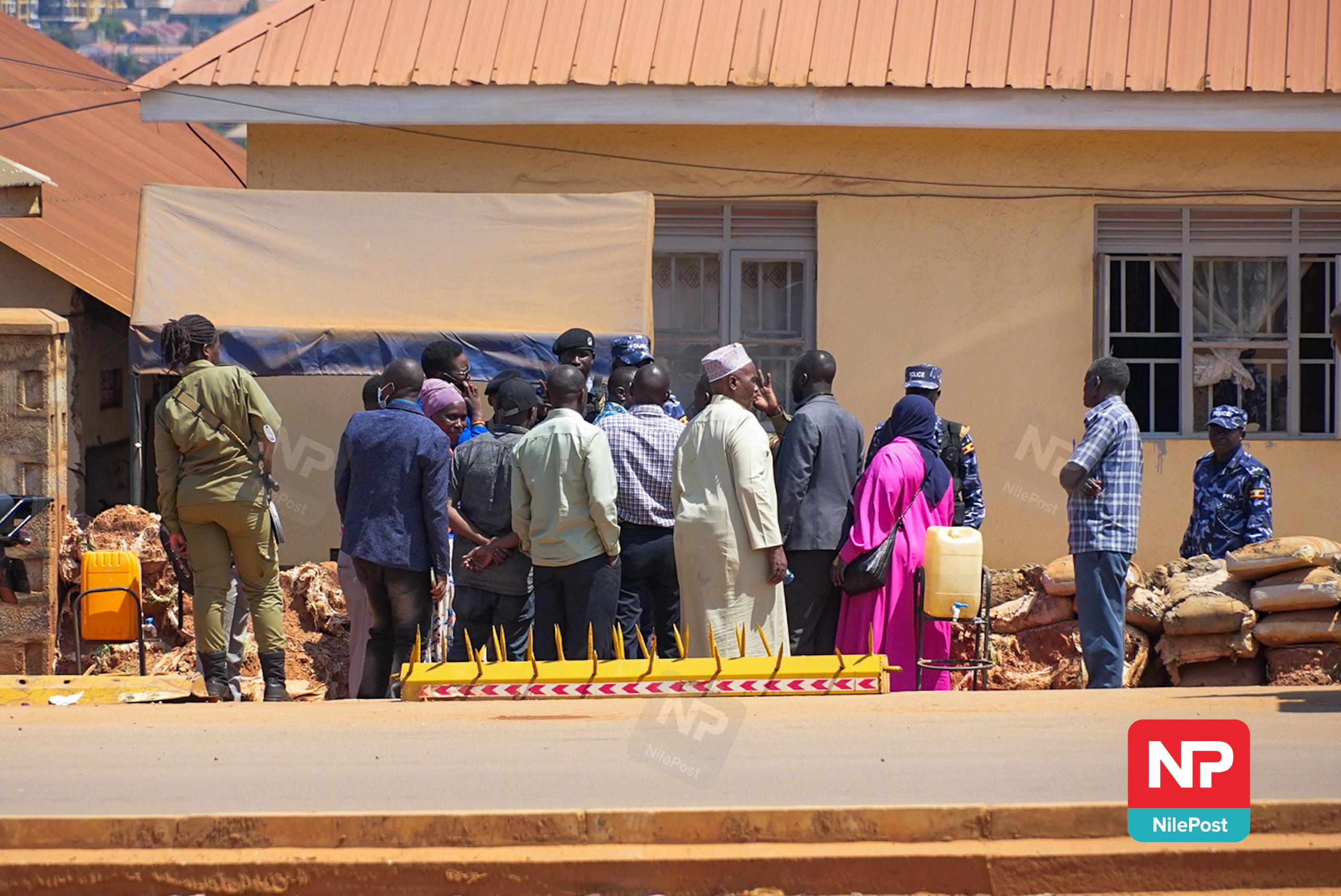
PFF party leaders on Wednesday morning thronged Kira Division Police to assess Lukwago’s condition amid concerns about his health and wellbeing.
But only his family members and lawyers were allowed in with the rest later only seeing him when he was being transported to court.
“The senior, our president Lukwago, we have talked to him, but we need more access, especially to his physicians,” Bayigga said.
“We also want to go and have solidarity with him and continue mounting pressure because that is what we want to do.”
According to Bayiga, discussions were ongoing regarding access to medical care for Lukwago, whose health condition remains a concern for party officials and family members.
The remarks were made hours before Lukwago was transferred from Kira Police Station to the Makindye Chief Magistrate’s Court, where he was later charged with misprision of treason.
Beyond Lukwago’s detention, Bayigga used the press conference to raise broader concerns about what he described as increasing political persecution targeting opposition figures.
He alleged that individuals perceived by the state as political threats were increasingly being subjected to arrests, detention and intimidation.
“There are targets within the population, everybody who they view as a threat in their succession struggle,” he said.
Bayiga further claimed that such actions were intended to divert opposition actors from political mobilization and democratic engagement.
The PFF official maintained that despite the challenges facing opposition leaders, the party would continue pursuing what it describes as a struggle for democratic governance and constitutionalism.
Bayigga also questioned the growing visibility of military figures in Uganda’s political discourse, particularly following recent public statements by Chief of Defence Forces Muhoozi Kainerugaba.
“But has this country been taken over by the military? That should be the question,” he said.
“I can answer in the affirmative that it looks like the military under the CDF, who happens to be a son of President Museveni, is taking over the leadership of this country and the rest are following.”
He added that the developments had raised concerns about the direction of governance in Uganda.
“I don’t know whether it is by design or by a subtle coup d’état. We are here to discover.”
The comments are likely to intensify debate over the role of security agencies and military leaders in Uganda’s political affairs, particularly as the country moves closer to another election cycle.
Bayigga also thanked media organizations, civil society groups and opposition political parties that publicly condemned Lukwago’s arrest and demanded accountability from authorities.
“If it were not for the media, all these nefarious things were not going to be exposed,” he said.
He urged political actors who had remained silent to speak out against what he described as unlawful arrests and detentions, arguing that Lukwago’s case should not be viewed in isolation.
The developments come against a backdrop of growing concern among opposition groups over arrests and prosecutions involving prominent political figures, including Kizza Besigye.
Political analysts note that Lukwago’s detention has once again highlighted longstanding tensions between the opposition and the state, while also reviving calls for greater unity among opposition parties.
For years, Uganda’s opposition has struggled to maintain a united front, even on major national issues. Efforts such as the Inter-Party Cooperation in 2011 and The Democratic Alliance in 2016 ultimately faltered due to disagreements over leadership and strategy.
Similar divisions resurfaced during the 2021 elections, when opposition parties failed to rally behind a single candidate, resulting in a fragmented challenge to the ruling establishment.
Attention has now shifted to the court proceedings against Lukwago, with supporters, lawyers and political allies closely monitoring developments in a case that is expected to attract significant public and legal scrutiny.
